
Tree Care Services in Pittsburgh, PA
Local Tree Service Expertise
From Squirrel Hill to Mount Washington, our tree service in Pittsburgh, PA covers neighborhoods across the city. Mature oaks, maples, and ash trees dominate Pittsburgh yards, and their care requires local knowledge. This page explains how trimming, removal, and stump grinding work in our clay-soil neighborhoods. Whether you're in Lawrenceville, Shadyside, or the North Shore, we handle the unique challenges Pittsburgh trees face.
How We Work
A clear process keeps your trees healthy and your property safe.
The Steps We Take
Each job starts with an honest assessment, moves through careful planning, and ends with a clean property. You'll know exactly what happens next at every stage.
Assessment
We inspect branches, trunk health, and proximity to power lines or structures. Pittsburgh's clay soils create shallow root systems, so we assess stability carefully.
Planning
We plan equipment placement, rigging angles, and debris handling. Neighborhoods like Polish Hill and South Side Slopes require special techniques for tight spaces.
Execution
Our crew removes branches or full trees with precision. Timing matters—oak pruning waits until deep winter to prevent oak wilt spread across Allegheny County.
Cleanup
We remove every branch, chip debris, and rake the yard. Your property looks cleaner after we leave than when we arrived.
You'll always know what's happening next—and when.
Our Services
Real tree solutions for Pittsburgh's climate and neighborhoods.
Tree Trimming & Pruning
Properties in East Liberty, Garfield, and McKees Rocks often have mature maples and oaks growing into overhead lines. Regular trimming removes deadwood, improves air flow, and maintains tree shape. Pittsburgh's humid summers make early spring pruning critical—work must finish before April to prevent fungal infections.
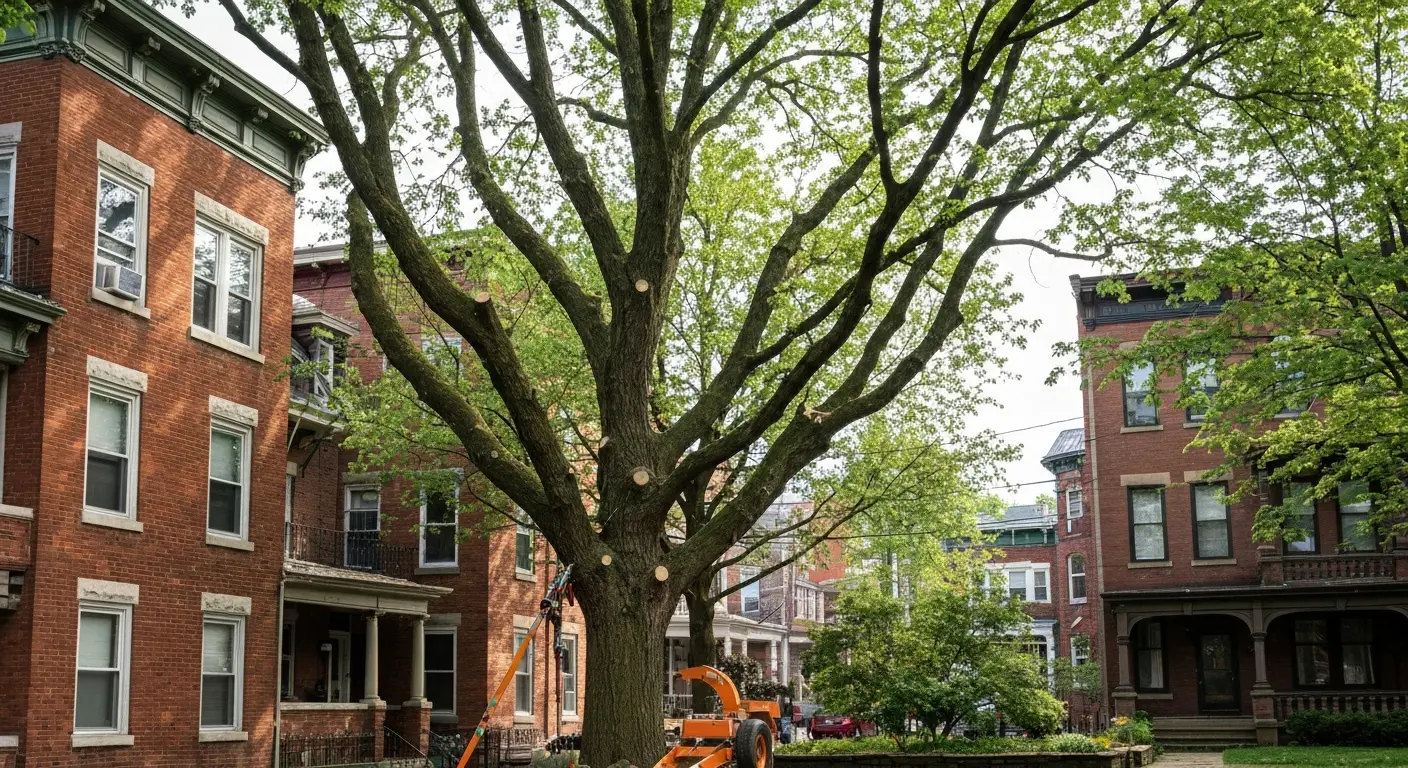
Crown reduction on mature oak near Shadyside structures—improves safety and sunlight access.
- Remove branches threatening rooflines or power lines
- Thin dense canopies to improve light penetration
- Selective removal of competing or crossed branches
- Seasonal timing to prevent disease and pest attraction
Tree Removal
Dead, diseased, or unstable trees pose real risks. Emerald ash borer has devastated ash populations, while oak wilt spreads rapidly near Frick Park and Schenley Park. When infection progresses, removal protects surrounding vegetation. Storm damage is common after Pittsburgh's winter weather; we provide emergency removal service.
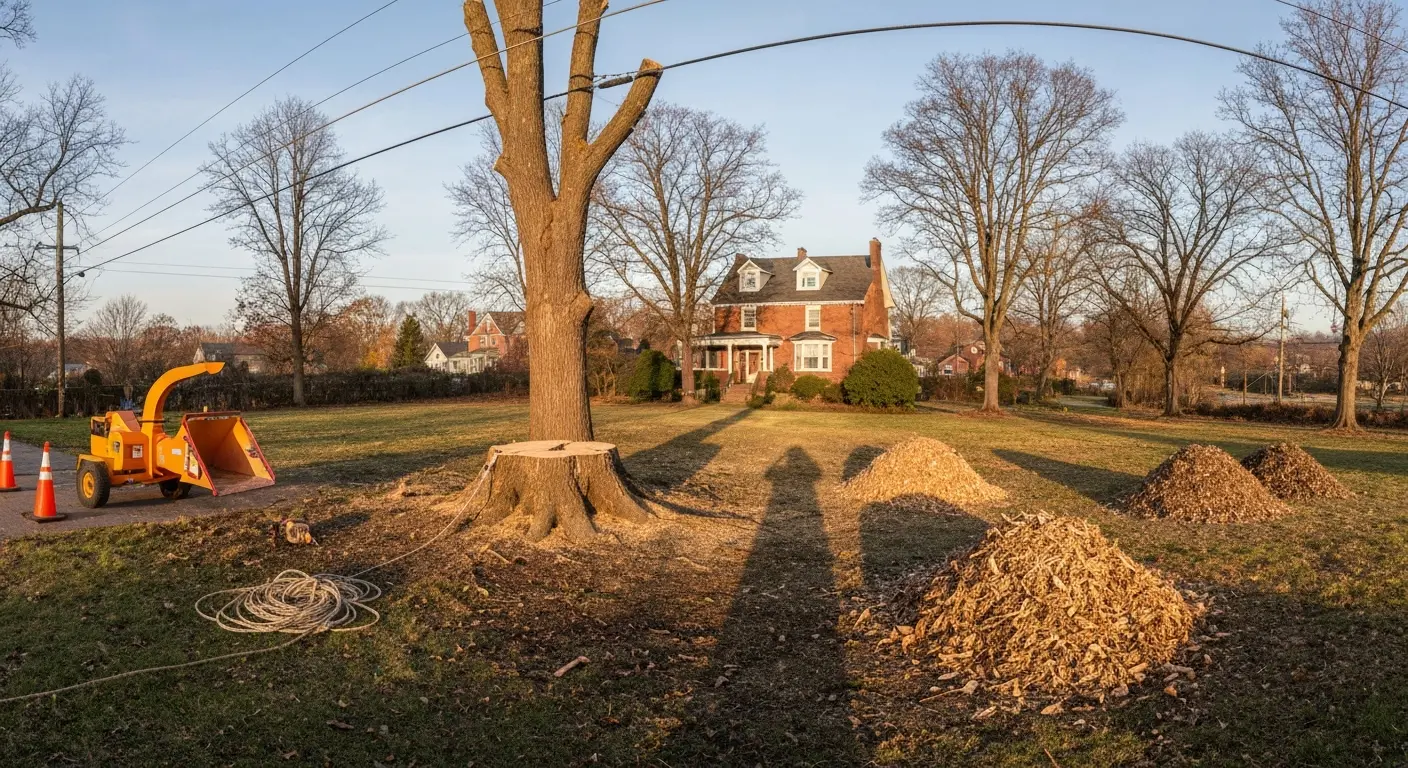
Emergency removal after storm—North Shore area near power lines handled with precision.
- Hazardous tree removal near homes and structures
- Disease removal to prevent spread (ash borer, oak wilt)
- 24/7 emergency storm damage response
- Safe rigging in tight spaces and near utilities
Stump Grinding
Stumps left behind become hazards and pest harbors. Older neighborhoods like Homestead and Braddock often have multiple stumps from decades of removals. We grind stumps six to twelve inches below grade, allowing grass restoration without disturbing rocky subsoil common on Pittsburgh hillsides.
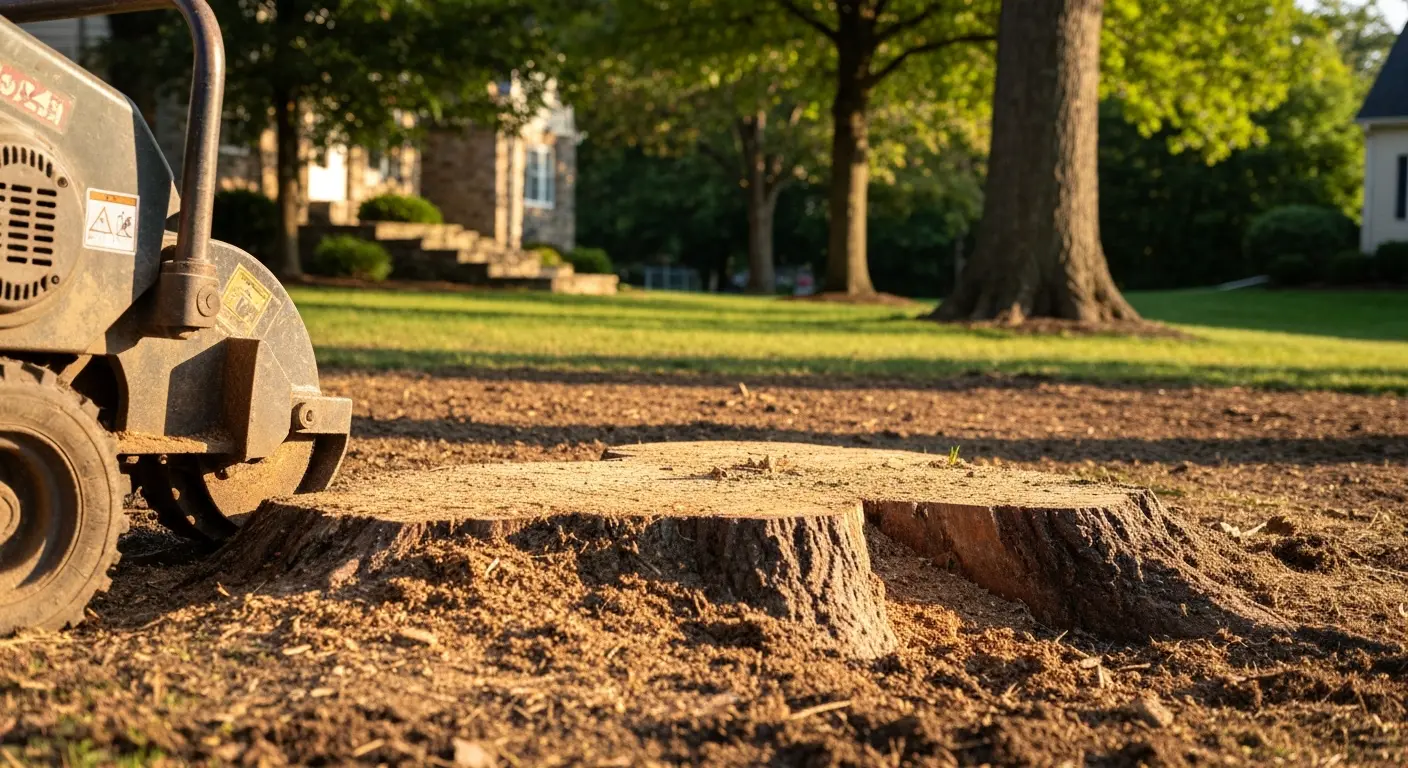
Below-grade grinding in South Hills properties—reclaim yard space and prevent regrowth.
- Grind stumps below grade for lawn restoration
- Prevent tripping hazards and pest harboring
- Complete cleanup of wood chips
- Suitable for hillside properties with bedrock near surface
Tree Health Assessment
Early detection saves trees. Yellowing leaves, hollow trunks, or cracks signal problems. We diagnose anthracnose, oak wilt, and emerald ash borer damage. Professional assessment determines whether treatment, trimming, or removal is needed. Homeowners across Pittsburgh trust our expertise to protect their landscape investments.
Tree Planting
Replacing removed trees maintains Pittsburgh's urban forest. We select species suited to clay soil and neighborhood character. Trees increase property value and provide long-term shade. Our recommendations match local conditions from Lawrenceville's tight streets to Mount Washington's hillsides.
Why Local Expertise Matters
Pittsburgh trees face specific challenges that require neighborhood knowledge.
Understanding Pittsburgh Soil
Heavy clay soil throughout Allegheny County restricts root development and holds excessive moisture during spring thaws. Trees in older neighborhoods like Lawrenceville and Bloomfield develop shallow root systems that compromise stability. This local soil knowledge prevents costly property damage.
Recognizing Local Diseases
Emerald ash borer has devastated ash populations across Pittsburgh. Oak wilt spreads rapidly in wooded areas near Frick Park and Schenley Park. Anthracnose attacks local species during humid springs. Early detection through professional assessment saves trees that might otherwise need removal.
Managing Pittsburgh Weather
Pittsburgh's variable weather stresses trees year-round. Winter snow loads break weak branches. Spring thaws flood root zones. Humid summers promote fungal infections through pruning wounds. Our timing and techniques address each seasonal challenge. Storm-split limbs on aging silver maples threaten rooflines in Mount Washington and Squirrel Hill properties.
Work completed at the right time with proper technique prevents emergency removal later. That's the value of local experience.
Coverage Areas
We serve neighborhoods throughout Pittsburgh and Allegheny County.
City Neighborhoods
From historic Shadyside homes to Mount Washington hillside properties and Squirrel Hill's older streets with mature oaks, we know your trees. North Shore areas near the rivers face storm damage from high winds. South Hills properties deal with slopes that stress root systems. Lawrenceville and Bloomfield have shallow-rooted trees in compacted clay soil. East Liberty and Garfield face overhead power line interference.
Getting Here
Call or message us with your address and a photo of the problem tree. We'll provide a timeframe and what to expect. If the issue is urgent, we offer same-day assessment and emergency removal. Our crew arrives with equipment ready to work safely in your neighborhood, whether that's narrow streets in Polish Hill or sloped yards in Mount Washington.
Ready to book? Contact us today with photos or a brief description of your tree concern.
Frequently Asked Questions
How long does tree removal take?
Small trees take a few hours; large trees near structures may require a full day or two. Cleanup includes removal of all debris.
Do I need a permit for tree removal in Pittsburgh?
Removal of hazardous or dead trees is typically allowed without permits, but diseased trees near public spaces may require city notice. We'll advise during assessment.
When is the best time to trim trees in Pittsburgh?
Late winter pruning before March prevents attracting insects; work must finish before April since humid summers promote fungal infections. Oak pruning waits until deep winter to prevent oak wilt spread.
What tree diseases are common in Pittsburgh?
Emerald ash borer devastates ash trees, oak wilt spreads in wooded areas near Frick Park, and anthracnose attacks local species. Early detection prevents costly removal.
Can stump grinding handle Pittsburgh's rocky soil?
Yes. Grinding six to twelve inches below grade works well on Pittsburgh hillsides where bedrock sits close to surface. Extraction becomes impractical in these areas.
Do you handle trees near power lines?
Yes, with utility coordination. Mature trees in East Liberty, Garfield, and McKees Rocks often grow into overhead lines. Utility companies must coordinate shutdowns for safe removal.
DISCOVER WHAT OUR CUSTOMERS HAVE TO SAY ABOUT US
REVIEWS
proudly serving these areas
Pennsylvania, PA
West Chester, PA
Allentown, PA
Erie, PA
Pittsburgh, PA
Philadelphia, PA
Scranton, PA
Reading, PA
READY TO take the next step?
get a free quote TODAY!
QUICK LINKS
our services
service areas
operating HOURS
Mon: 6:00 am - 8:00 pm
Tue: 6:00 am - 8:00 pm
Wed: 6:00 am - 8:00 pm
Thu: 6:00 am - 8:00 pm
Fri: 6:00 am - 8:00 pm
Sat: 6:00 am - 8:00 pm
Sun: Closed - Closed